Vol. 1 No. 2 (2024): Handam: Journal of Islamic Calligraphy
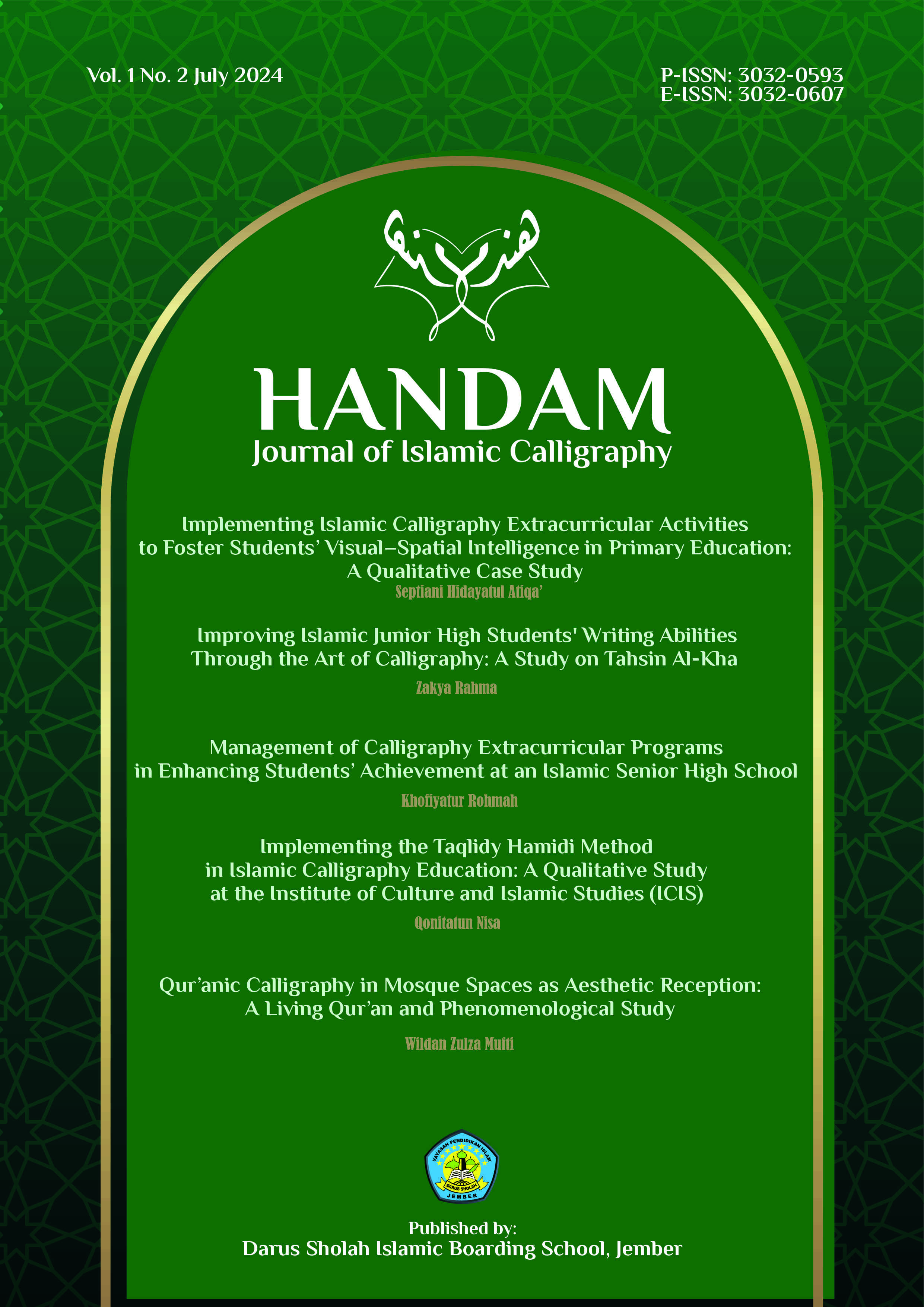
This issue features a collection of studies that explore the role of Islamic calligraphy in educational, managerial, and socio-religious contexts. Several articles focus on the integration of calligraphy within educational institutions, highlighting its contribution to students’ cognitive and creative development. One study investigates the implementation of calligraphy extracurricular activities in primary education and shows how such activities can foster students’ visual–spatial intelligence through artistic engagement and disciplined practice. Another article examines how the art of tahsin al-khaṭ can improve writing abilities among Islamic junior high school students by strengthening their attention to form, precision, and aesthetic sensitivity.
The issue also addresses institutional aspects of calligraphy education. A study on the management of calligraphy extracurricular programs in an Islamic senior high school analyzes how structured planning, organization, and evaluation can enhance students’ achievements in both artistic and academic domains. Meanwhile, research on the Taqlidy Hamidi method at the Institute of Culture and Islamic Studies (ICIS) discusses pedagogical strategies used in teaching Islamic calligraphy and their effectiveness in developing students’ technical and artistic skills.
Finally, a phenomenological study on Qur’anic calligraphy in mosque spaces examines how calligraphic inscriptions function as aesthetic receptions of the Qur’an, shaping spiritual experience and visual engagement within sacred architectural environments.
Published:
30-07-2024


 Email: smppds99@gmail.com