Archives
-
Handam: Journal of Islamic Calligraphy
Vol. 3 No. 1 (2026) -
Handam: Journal of Islamic Calligraphy
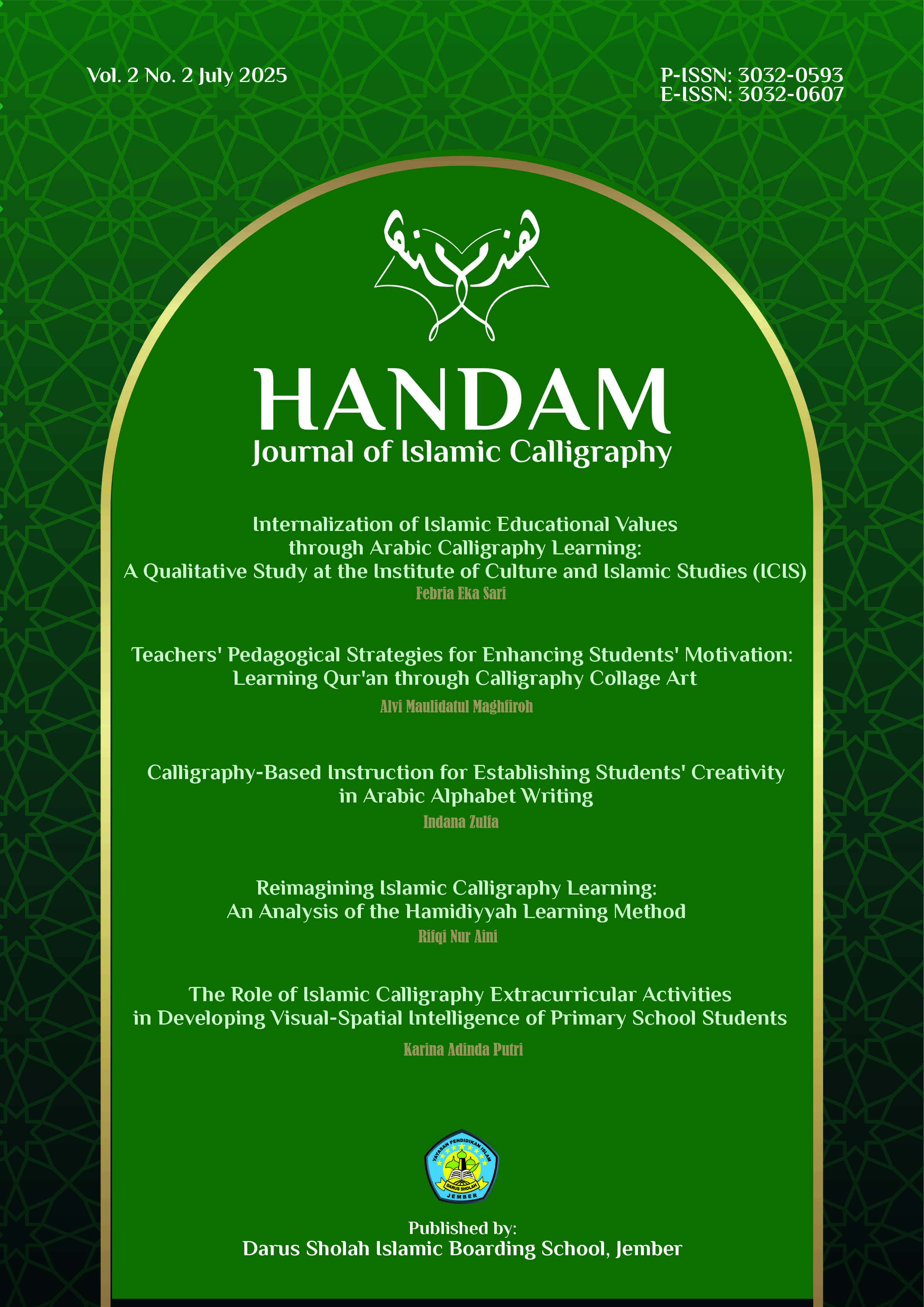
Vol. 2 No. 2 (2025)This issue presents a collection of studies that examine the role of Islamic calligraphy in educational development, pedagogical innovation, and character formation within Islamic learning environments. Several articles explore how calligraphy learning can serve as an effective medium for internalizing Islamic educational values and fostering students’ moral and intellectual growth. One qualitative study conducted at the Institute of Culture and Islamic Studies (ICIS) highlights how Arabic calligraphy learning contributes to the internalization of Islamic values through disciplined practice, aesthetic appreciation, and spiritual reflection.
Other contributions focus on teaching strategies and instructional methods designed to enhance student engagement and motivation. One article investigates teachers’ pedagogical approaches in teaching Qur’anic content through calligraphy collage art, demonstrating how creative activities can increase students’ motivation and participation in learning. Another study discusses calligraphy-based instruction as a means of strengthening students’ creativity in writing the Arabic alphabet.
In addition, a conceptual analysis of the Hamidiyyah learning method offers insights into innovative approaches to Islamic calligraphy education and its pedagogical foundations. Finally, research on extracurricular calligraphy activities in primary schools shows their potential to develop students’ visual–spatial intelligence and artistic sensitivity. Overall, the articles in this issue highlight the educational, creative, and character-building potential of Islamic calligraphy in contemporary Islamic education.
-
Handam: Journal of Islamic Calligraphy
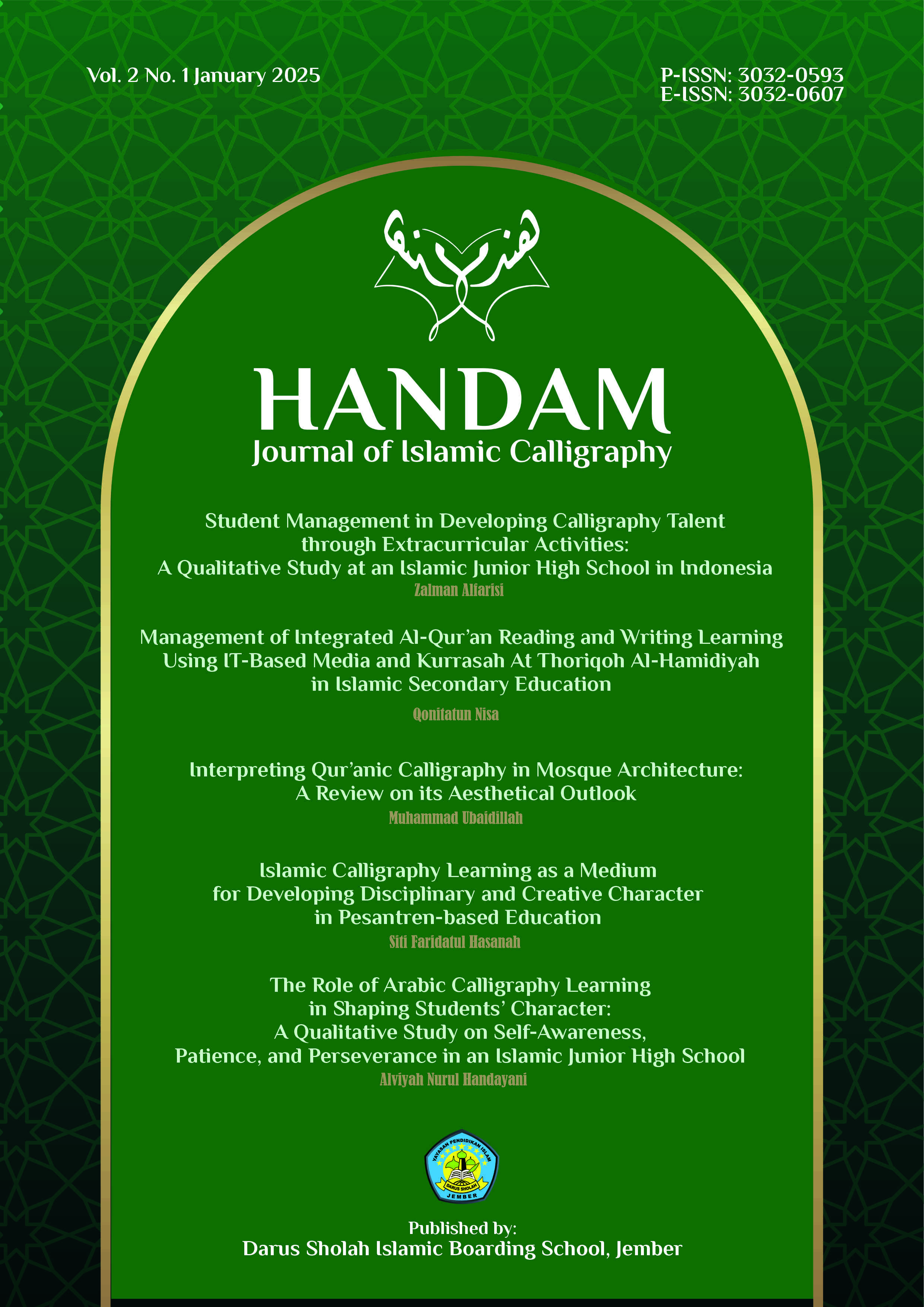
Vol. 2 No. 1 (2025)This issue presents a collection of studies that explore the role of Islamic calligraphy in education, student development, and aesthetic interpretation within Islamic contexts. Several articles focus on the management and implementation of calligraphy learning and extracurricular programs in Islamic educational institutions. One study examines how effective student management strategies can nurture calligraphy talent through structured extracurricular activities at an Islamic junior high school in Indonesia. Another article discusses the management of integrated Qur’an reading and writing instruction using IT-based media combined with Kurrasah At Thoriqoh Al-Hamidiyah, highlighting innovative approaches to improving students’ literacy in Islamic secondary education.
In addition, the issue explores the educational and character-building dimensions of calligraphy learning. Research conducted in pesantren-based education demonstrates how calligraphy activities can serve as a medium for cultivating discipline, creativity, and artistic sensitivity among students. Similarly, another qualitative study reveals that learning Arabic calligraphy contributes to the development of important personal qualities such as self-awareness, patience, and perseverance among Islamic junior high school students.
Likewise, a conceptual review on Qur’anic calligraphy in mosque architecture analyzes its aesthetic significance and visual impact within sacred spaces, emphasizing how calligraphic forms enhance both the spiritual atmosphere and artistic identity of Islamic architectural design. Overall, these studies highlight the educational, managerial, and cultural significance of Islamic calligraphy in contemporary Muslim societies.
-
Handam: Journal of Islamic Calligraphy
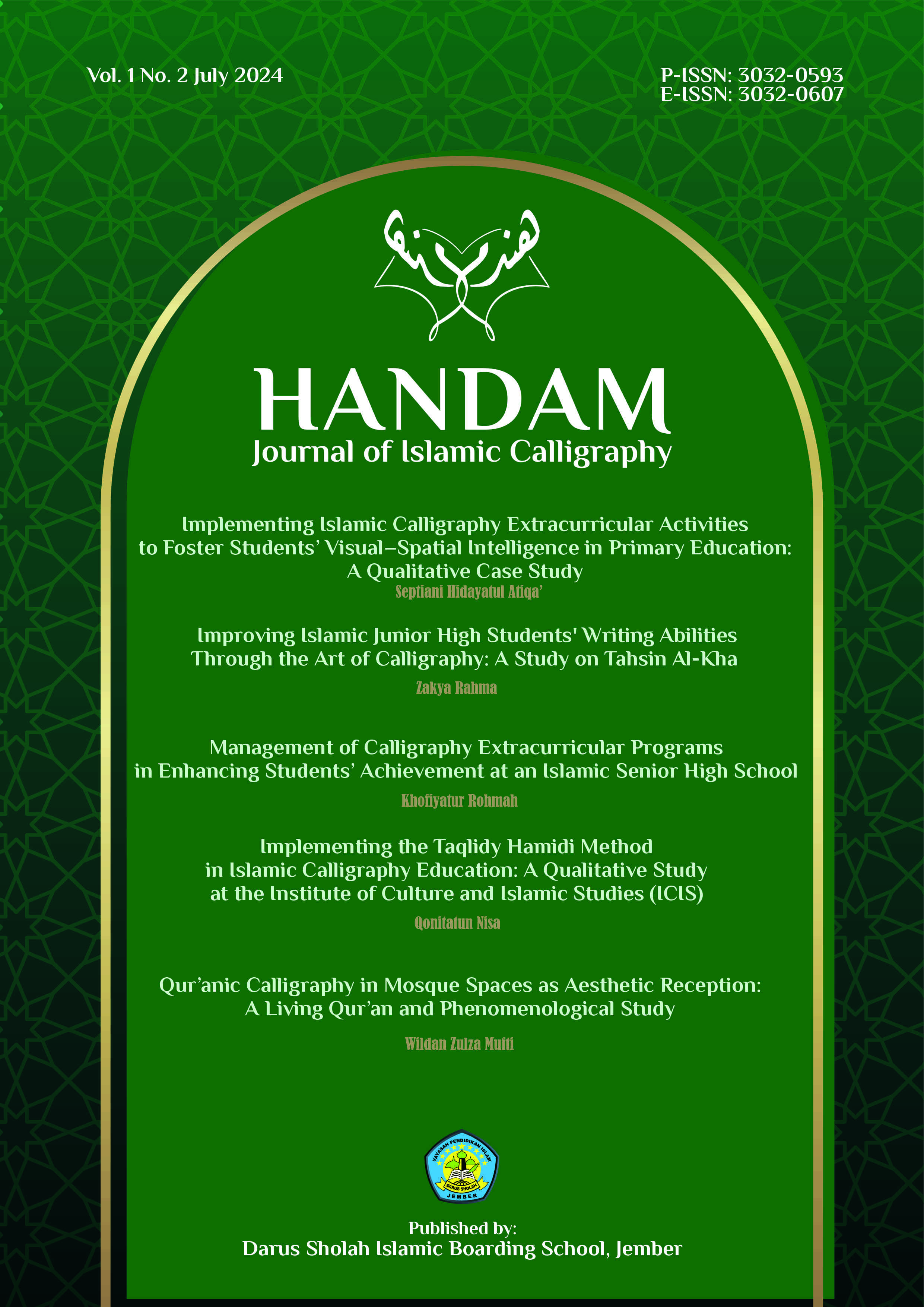
Vol. 1 No. 2 (2024)This issue features a collection of studies that explore the role of Islamic calligraphy in educational, managerial, and socio-religious contexts. Several articles focus on the integration of calligraphy within educational institutions, highlighting its contribution to students’ cognitive and creative development. One study investigates the implementation of calligraphy extracurricular activities in primary education and shows how such activities can foster students’ visual–spatial intelligence through artistic engagement and disciplined practice. Another article examines how the art of tahsin al-khaṭ can improve writing abilities among Islamic junior high school students by strengthening their attention to form, precision, and aesthetic sensitivity.
The issue also addresses institutional aspects of calligraphy education. A study on the management of calligraphy extracurricular programs in an Islamic senior high school analyzes how structured planning, organization, and evaluation can enhance students’ achievements in both artistic and academic domains. Meanwhile, research on the Taqlidy Hamidi method at the Institute of Culture and Islamic Studies (ICIS) discusses pedagogical strategies used in teaching Islamic calligraphy and their effectiveness in developing students’ technical and artistic skills.
Finally, a phenomenological study on Qur’anic calligraphy in mosque spaces examines how calligraphic inscriptions function as aesthetic receptions of the Qur’an, shaping spiritual experience and visual engagement within sacred architectural environments.
-
Handam: Journal of Islamic Calligraphy
Vol. 1 No. 1 (2024)This issue presents a collection of studies that examine Islamic calligraphy from multiple perspectives, including education, aesthetics, da'wah strategies, digital manuscripts, and the practice of calligraphy in religious public spaces. Several articles focus on the learning process of calligraphy in educational institutions, particularly Islamic junior high schools, by exploring teaching methods, student engagement, and the potential development of da'wah strategies through calligraphy as a learning medium. Another study analyzes calligraphers’ aesthetic reception of the Hadith of the Prophet Muhammad SAW through the tradition of Hilyah Syarifah calligraphy, illustrating how sacred texts are transformed into visual expressions that combine spiritual meaning and artistic value.
In addition, research on calligraphy in digital Qur'anic manuscripts investigates the transformation of calligraphic forms and their presentation in the context of modern digital technology. Meanwhile, a field study of calligraphy at the Great Mosque of At-Taqwa Gumawang Belitang, East OKU, South Sumatra, explores the types of scripts, color compositions, and media used in mosque calligraphic decorations.
Overall, the articles in this issue demonstrate that Islamic calligraphy functions not only as a form of religious visual art but also as a medium for education, aesthetic expression, da'wah communication, and cultural transformation in contemporary Muslim societies.


 Email: smppds99@gmail.com