Vol. 2 No. 1 (2025): Handam: Journal of Islamic Calligraphy
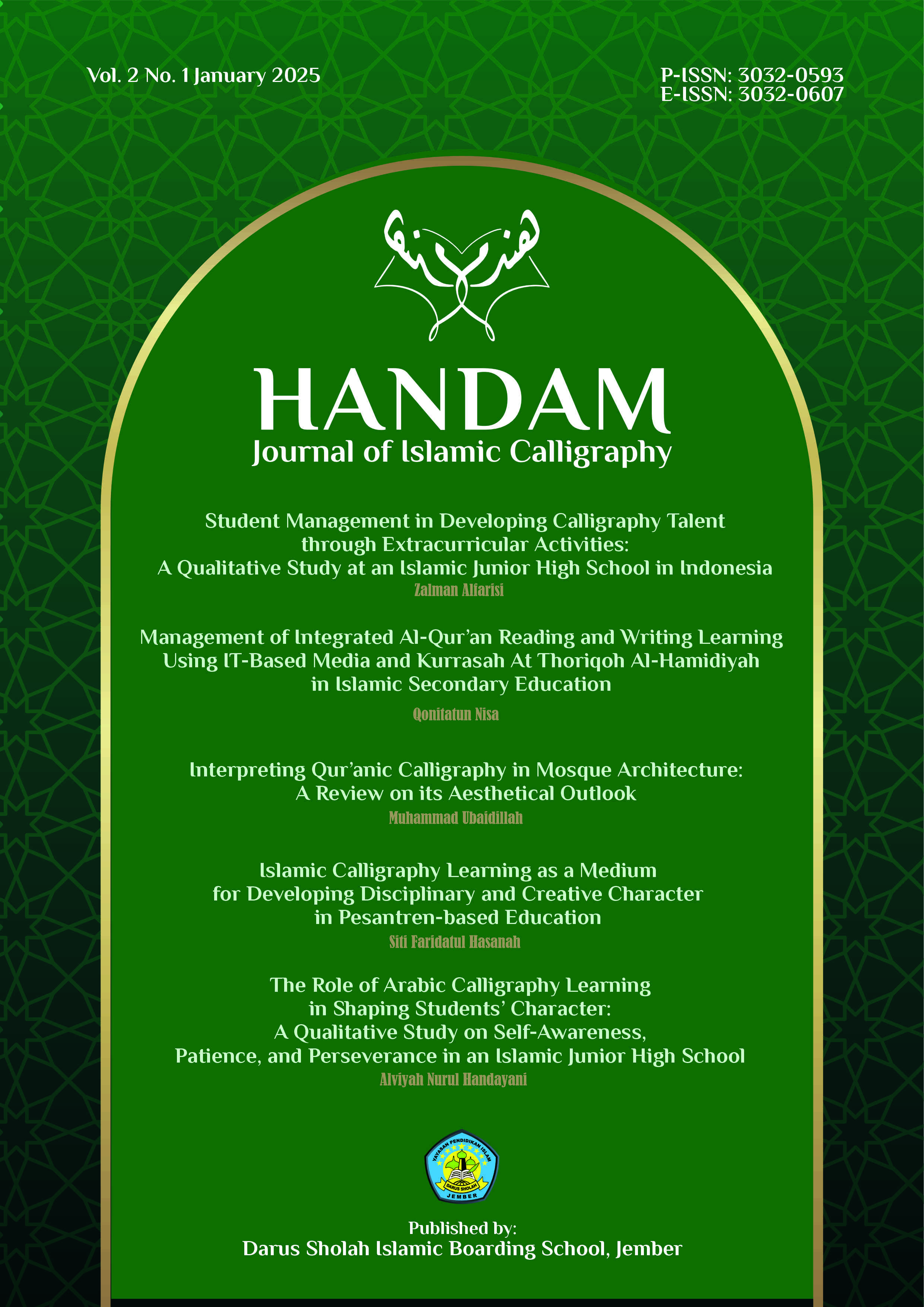
This issue presents a collection of studies that explore the role of Islamic calligraphy in education, student development, and aesthetic interpretation within Islamic contexts. Several articles focus on the management and implementation of calligraphy learning and extracurricular programs in Islamic educational institutions. One study examines how effective student management strategies can nurture calligraphy talent through structured extracurricular activities at an Islamic junior high school in Indonesia. Another article discusses the management of integrated Qur’an reading and writing instruction using IT-based media combined with Kurrasah At Thoriqoh Al-Hamidiyah, highlighting innovative approaches to improving students’ literacy in Islamic secondary education.
In addition, the issue explores the educational and character-building dimensions of calligraphy learning. Research conducted in pesantren-based education demonstrates how calligraphy activities can serve as a medium for cultivating discipline, creativity, and artistic sensitivity among students. Similarly, another qualitative study reveals that learning Arabic calligraphy contributes to the development of important personal qualities such as self-awareness, patience, and perseverance among Islamic junior high school students.
Likewise, a conceptual review on Qur’anic calligraphy in mosque architecture analyzes its aesthetic significance and visual impact within sacred spaces, emphasizing how calligraphic forms enhance both the spiritual atmosphere and artistic identity of Islamic architectural design. Overall, these studies highlight the educational, managerial, and cultural significance of Islamic calligraphy in contemporary Muslim societies.
Published:
30-01-2025


 Email: smppds99@gmail.com